If you're trying to conceive, it's easy to feel like every food choice suddenly carries a lot of weight. In reality, fertility nutrition usually looks less dramatic than social media makes it out to be. A good trying-to-conceive meal plan is not about perfection, restriction, or chasing "fertility superfoods." It's about building steady, repeatable habits that help support hormone health, ovulation, nutrient stores, energy, digestion, and overall resilience before pregnancy.
The strongest approach to preconception nutrition is usually simple: regular meals, adequate protein, fiber-rich carbohydrates, healthy fats, hydration, and a handful of key micronutrients important for early pregnancy and reproductive health. Food comes first, and supplements can fill gaps when needed.
This guide walks you through what a fertility nutrition plan should prioritize, which nutrients matter most, how to build balanced meals and snacks, and a practical 7-day meal plan you can actually use.
Medical Disclaimer
As always, this is educational information, not individualized medical care.
What A Trying-To-Conceive Meal Plan Should Prioritize
A meal plan for trying to conceive should prioritize consistency over intensity.
Your body does not need a complete lifestyle overhaul overnight. It benefits most from stable nourishment you can keep doing week after week.
At the center of fertility nutrition is a balanced plate:
- Carbohydrates for energy and hormone support
- Protein for tissue building, blood sugar balance, and early embryo development
- Healthy fats for hormone production and absorption of fat-soluble nutrients
- Fiber and colorful produce for digestion, blood sugar support, and antioxidant intake
In practical terms, that means leaning on whole and minimally processed foods most of the time, including:
- Vegetables and fruit
- Beans, lentils, and peas
- Full-fat dairy products
- Eggs, fatty fish, poultry, beef, and other protein-rich foods
- Nuts, seeds, avocado, and olive oil
It also helps to build a baseline routine. Many people do better when they stop asking, "What should I eat?" three times a day and instead create a few repeat options.
You might strengthen one anchor breakfast, keep a default grocery list, and prep a few basics, such as cooked grains, washed and chopped produce, or pre-baked protein.
A strong preconception nutrition plan should also support:
- Hydration and mineral intake
- Regular bowel movements and digestion
- Steady blood sugar
- Adequate overall calories
- Sustainable routines during busy weeks
If your current eating pattern includes skipped meals, long gaps without food, low protein intake, or little meal structure, start there. Those basics often matter more than adding trendy powders or niche foods. And if symptoms like significant fatigue, very irregular cycles, or digestive issues are affecting your ability to eat well, it's a good idea to check in with your healthcare provider.
Key Nutrients In Preconception Nutrition For Hormone, Ovulation, And Egg Health
Preconception nutrition is not about chasing one magical nutrient. It's about covering the basics well enough that your body has the raw materials it needs for hormone signaling, ovulation, thyroid function, and support for early pregnancy.
Here are the key nutrients to prioritize from food first.
Folate
Folate is essential before and during early pregnancy because it supports healthy neural tube development very early on, often before you know you're pregnant.
Food sources include:
- Leafy greens
- Beans and lentils
- Avocado
- Citrus
- Asparagus
Because folate needs rise around conception, a prenatal vitamin with methylfolate is recommended during the trying-to-conceive stage.
Iron
Iron supports oxygen transport, energy production, and healthy red blood cell production. Low iron status can leave you feeling depleted and may become more noticeable once pregnancy begins.
Helpful food sources include:
- Beef and dark poultry meat
- Shellfish
- Beans and lentils
- Tofu
- Cooked spinach
- Spirulina
Pair iron-rich foods with vitamin C sources such as berries, citrus, tomatoes, or bell peppers to improve iron absorption.
Choline
Choline matters for early brain and nervous system development and is commonly under-consumed. Eggs are one of the richest sources. You can also get choline from:
- Meat
- Fish
- Dairy
- Soy foods
Iodine, Selenium, And Zinc
These minerals play important roles in thyroid health and reproductive function. Food sources include:
- Seafood
- Dairy
- Eggs
- Beans
- Meat
- Brazil nuts
Omega-3 Fats And Vitamin D
Fatty fish such as salmon, sardines, and trout provide omega-3 fatty acids that support overall reproductive and pregnancy health, one route is through reducing inflammation. Some fish also provide vitamin D, along with fortified dairy and eggs.
If you have symptoms such as fatigue, hair loss, cold intolerance, or irregular cycles, ask your clinician about possible nutrient or thyroid evaluation. Those symptoms can have many causes, so they deserve proper medical assessment rather than self-diagnosis.
How To Build Fertility-Friendly Meals And Snacks
A fertility-friendly meal does not need a special label. It just needs enough structure to keep you nourished, satisfied, and metabolically steady.
A simple formula is:
- Fiber/color: vegetables, fruit, beans, lentils
- Protein: eggs, Greek yogurt, cottage cheese, chicken, fish, tofu, beans
- Healthy fat: olive oil, avocado, nuts, seeds
- Smart carbohydrate: oats, potatoes, fruit, brown rice, quinoa, whole grain, or sourdough bread
- Flavor: herbs, lemon, yogurt sauces, tahini, spices
A quick plate guide
Try building meals with:
- 1/2 plate of non-starchy vegetables
- 1/4 plate protein-rich foods
- 1/4 plate whole grains, fruit, or starchy vegetables
- Add a source or two of quality fats
This kind of structure can support blood sugar balance without pushing low-carb extremes.
7-Day Trying-To-Conceive Meal Plan
This 7-day trying-to-conceive meal plan is designed to be balanced, realistic, and easy to repeat. Adjust portions based on your appetite, activity level, and individual needs.
7-Day Trying-To-Conceive Meal Plan
Balanced, realistic meals designed to support fertility nutrition.
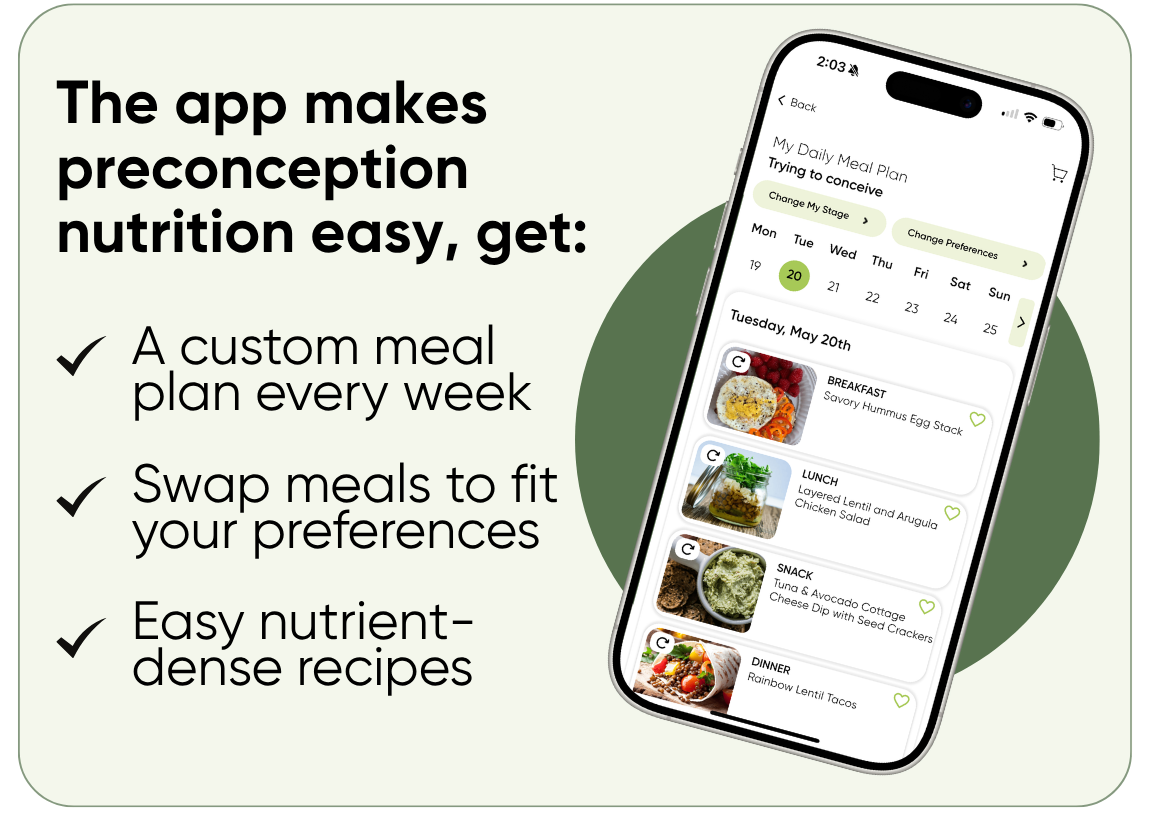
My Daily Meal Plan
Trying to Conceive
Tuesday, April 14
2-ingredient cheesy protein snack
Low-Carb Cheeseburger Salad
Hydrating Cucumber Pineapple Smoothie
Fish & Avocado Fiesta Tacos
Pistachio Trail Mix
Smart snack ideas
The best snacks help prevent getting overly hungry. Pair carbohydrate with protein or fat when possible.
- Apple with peanut butter
- Yogurt with berries and chia seeds
- Cottage cheese on top of hard-boiled eggs
- Hummus with carrots and cucumbers
- Trail mix with nuts, seeds, and dried apricots
Hydration matters too.
Start with regular water intake throughout the day, and consider a mineral- or electrolyte-rich drink if you struggle to stay hydrated, especially in the heat or after exercise. For digestion support, aim for roughly 25 to 35 grams of fiber daily, enough fluids, and regular movement.
Foods, Drinks, And Habits To Limit While Trying To Conceive
Generally, we prefer to focus on what to include rather than just what to avoid. Still, there are a few foods, drinks, and habits worth limiting during the preconception period.
Foods and drinks to limit
- Sugar-sweetened drinks like soda and energy drinks
- Overconsumption of highly processed snack foods that crowd out more nourishing options
- Frequent fried foods
- High-mercury fish
- Alcohol
- Excessive caffeine
You do not need a perfect diet. A cookie or takeout meal is not an issue. The bigger pattern matters more: regular nourishment, enough protein, enough fiber, and a reasonable intake of nutrient-dense foods.
Habits that can make nutrition harder
- Skipping meals and then getting overly hungry
- Under-eating in the name of being "healthy"
- Following rigid food rules
- Relying on caffeine instead of meals and hydration
- Letting long, stressful days crowd out basic eating routines
Many people trying to conceive also fall into an all-or-nothing mindset. They start strong on Monday, fall off plan by Wednesday, and quit by Friday. That cycle is exhausting. Progress is usually better supported by boring, repeatable habits.
Try identifying your biggest friction point:
- Lack of time
- Poor sleep
- Low appetite
- Stress
- Decision fatigue
- Not having food ready when the day gets busy
You do not need to solve all of them at once. Start by noticing what gets in the way most often.
How to make this meal plan work in real life
A plan is only useful if it reduces stress. To make it easier:
- Batch-cook one protein
- Cook a grain for 2 to 3 days at a time
- Wash and chop produce ahead
- Keep frozen vegetables and canned beans on hand
- Repeat favorite meals instead of forcing variety every day
You can also rotate one "anchor breakfast" most mornings and change lunches and dinners as needed. That often works better than constantly cooking from scratch.
If you follow a vegetarian, dairy-free, or gluten-free dietary pattern, our meal plans in the app can still work for you. Select your dietary preferences when you sign up!
A Gentle Note On Supplements
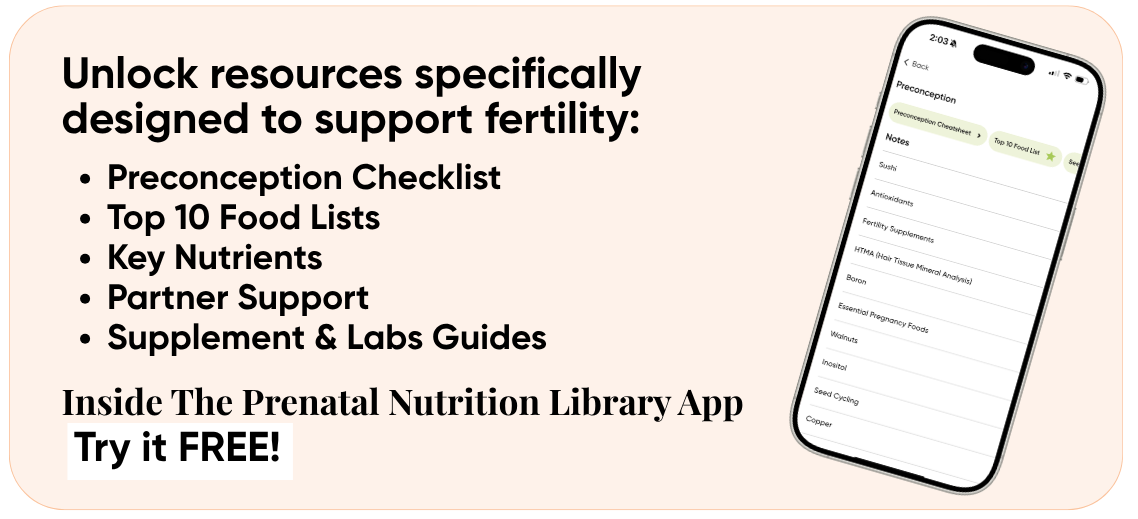
A prenatal vitamin is widely recommended during preconception, while omega-3s, minerals or electrolytes, inositol, CoQ10, or extra protein may be appropriate in some situations. But supplements should match your diet, health history, labs, and clinician guidance rather than internet trends.
Conclusion
A trying-to-conceive meal plan does not need to be complicated to be effective. In most cases, the most helpful fertility nutrition habits are also the least flashy: balanced meals, regular eating, hydration, fiber, enough protein, and nutrient-dense foods repeated often enough to become routine.
It is about helping your body feel supported, nourished, and more resilient through habits that are realistic enough to repeat.
Start where there is the least friction. Repeat what works. Build from there.
When To Seek Medical Advice
Talk with a healthcare provider if you have irregular cycles, suspected thyroid symptoms, significant fatigue, hair loss, painful periods, signs of low iron, or concerns about ovulation. These symptoms can have several causes and deserve individualized care.
If you want more tailored nutrition support, consider setting up a consultation with one of our registered dietitians here.
Ryann Kipping
Licensed Dietitian & Founder of The Prenatal Nutrition Library
Prenatal dietitian with a Master's in Public Health and author of The Feel-Good Pregnancy Cookbook. Founder of The Prenatal Nutrition Library App.